
Tenant Rights in India: Can a Landlord Enter Your Rented Home Without Permission? Know What Law Says

Questions around privacy and rental rights are becoming increasingly common as more people move into rented accommodations across Indian cities. One major concern many tenants face is whether landlords can legally enter a rented property without prior notice or permission. Understanding tenant rights in India is important because rental agreements often create confusion regarding privacy, access, and legal responsibilities.
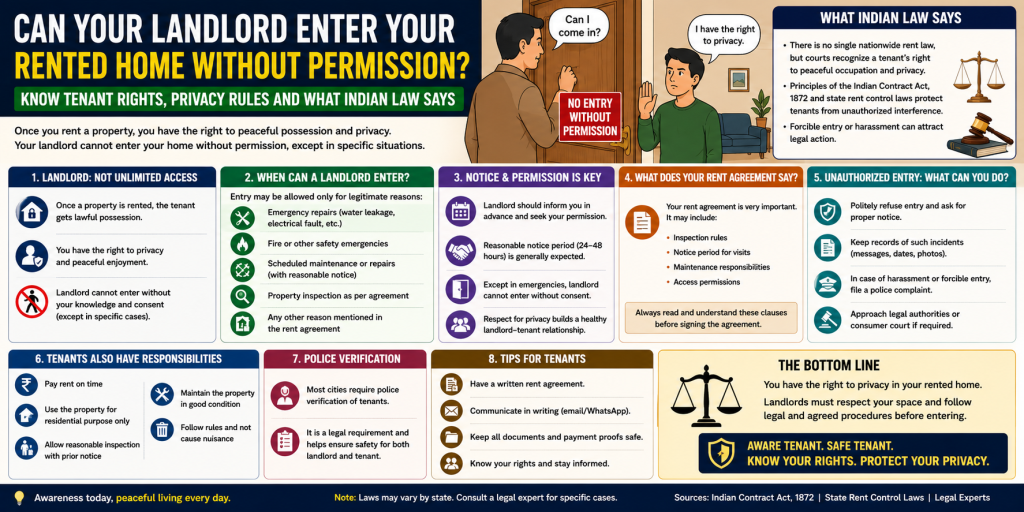
Legal experts say that once a property is rented out, tenants receive certain rights related to peaceful occupation and privacy, even though the ownership remains with the landlord.
Indian law generally discourages landlords from entering a tenant’s residence without consent except under specific circumstances.
Does a Landlord Have Unlimited Access?
According to legal experts discussing tenant rights in India, landlords do not have unrestricted authority to enter rented homes whenever they want.
Once a property is rented:
- The tenant receives lawful possession
- Privacy rights become applicable
- Unauthorized entry may create legal disputes
Even property owners are expected to respect a tenant’s reasonable privacy and peaceful enjoyment of the rented premises.
What Indian Rental Laws Generally Say
The discussion around tenant rights in India is mainly governed through:
- Rent agreements
- State rent control laws
- Contract law principles
Although India does not have one single nationwide rental law covering every situation, courts generally recognize that tenants are entitled to privacy during the rental period.
Permission Usually Required Before Entry
Legal experts say landlords are generally expected to:
- Inform tenants in advance
- Seek permission before visiting
- Enter only for legitimate reasons
This principle forms an important part of tenant rights in India and helps prevent harassment or misuse of authority.
Situations Where Entry May Be Allowed
While privacy is protected under tenant rights in India, certain situations may justify landlord access.
These may include:
- Emergency repairs
- Fire or safety risks
- Serious water leakage issues
- Scheduled maintenance work
- Property inspection agreed in rental contract
Even in such cases, reasonable notice is usually considered appropriate unless there is an emergency.
Rent Agreement Plays Important Role
One of the most important factors in tenant rights in India is the rental agreement signed between both parties.
A proper agreement may clearly mention:
- Inspection rules
- Visitor notice periods
- Maintenance procedures
- Access permissions
Legal experts strongly advise tenants to carefully read these clauses before signing.
Can Unauthorized Entry Be Challenged?
Yes. Experts say repeated unauthorized entry may violate tenant rights in India and could potentially be challenged legally.
Tenants facing harassment may:
- Raise objections formally
- Document incidents
- Seek police assistance in serious cases
- Approach legal authorities if required
Courts generally favor reasonable privacy protections for tenants.
Privacy Rights Are Increasingly Important
The debate around tenant rights in India has become more relevant due to increasing awareness about privacy rights.
Tenants today expect:
- Safe living environments
- Respect for personal space
- Freedom from unnecessary interference
Urban rental culture is gradually becoming more structured and legally aware.
Landlords Also Have Certain Rights
While discussing tenant rights in India, experts also note that landlords retain certain legal rights over their property.
These include:
- Receiving rent on time
- Conducting necessary repairs
- Inspecting property condition reasonably
- Preventing illegal usage of premises
The relationship works best when both parties follow agreed contractual terms.
Police Verification and Legal Compliance
In many Indian cities, landlords and tenants are expected to complete police verification procedures.
This process helps ensure:
- Legal documentation
- Identity verification
- Rental transparency
Such measures are separate from the privacy protections connected to tenant rights in India.
Importance of Written Communication
Experts recommend maintaining written communication regarding property visits and inspections.
For stronger protection of tenant rights in India, tenants should ideally:
- Keep rental agreements documented
- Use written notices when possible
- Save communication records
This can help avoid misunderstandings later.
Growing Need for Rental Awareness
The increasing focus on tenant rights in India reflects the growing rental housing market across cities like Delhi, Mumbai, Bengaluru, and Hyderabad.
As urban renting rises, awareness regarding:
- Tenant privacy
- Legal rights
- Fair rental practices
is becoming increasingly important for both tenants and landlords.
Conclusion
Understanding tenant rights in India is essential for maintaining a fair and respectful landlord-tenant relationship. While landlords continue owning the property, tenants generally enjoy privacy and peaceful occupation rights during the rental period. In most situations, landlords are expected to seek permission before entering rented premises unless emergencies or agreed contractual conditions apply.
Legal experts say clear rental agreements, proper communication, and awareness of basic legal protections can help both landlords and tenants avoid unnecessary disputes and maintain healthy rental arrangements.
Also read: Trump Iran Framework Criticism Grows as He Pushes Bigger Middle East Peace Vision
Add The News Pixel as a preferred source on Google- Click Here