Indian-Crewed Vessels US-Iran Conflict: 3 Attacks in 3 Days Raise Maritime Security Concerns
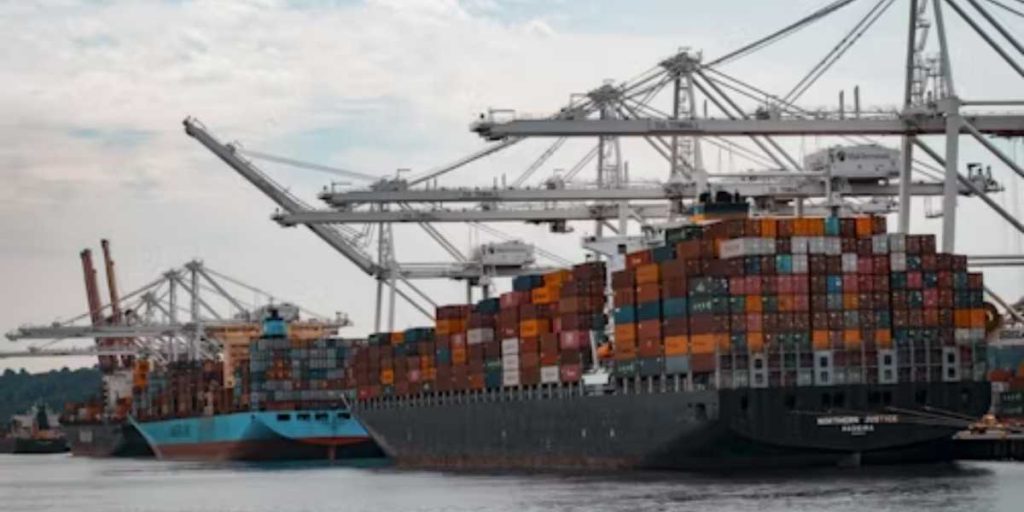
The Indian-crewed vessels US-Iran conflict has become a major international concern after three separate commercial ships carrying Indian sailors were caught in escalating tensions between the United States and Iran within just three days. The incidents have highlighted the growing risks facing merchant shipping in the Gulf region and raised serious questions about the safety of civilian maritime workers operating in one of the world’s most strategically important waterways.
As geopolitical tensions continue to rise, the Indian-crewed vessels US-Iran conflict has drawn attention not only from India but also from the global shipping industry, energy markets, and international policymakers. The attacks underscore how regional military confrontations can quickly affect commercial trade and innocent civilian crews.
How the Crisis Began
The latest Indian-crewed vessels US-Iran conflict unfolded amid renewed hostilities between Washington and Tehran. The Gulf region, particularly the Strait of Hormuz and nearby waters off Oman, has long been considered a sensitive geopolitical hotspot.
As military activities intensified, commercial vessels operating near these strategic routes suddenly found themselves at risk. Within a span of three days, three separate ships carrying Indian crew members became involved in incidents linked to the broader confrontation.
The events shocked the maritime community because merchant ships are generally considered civilian assets and play a crucial role in maintaining global trade flows.
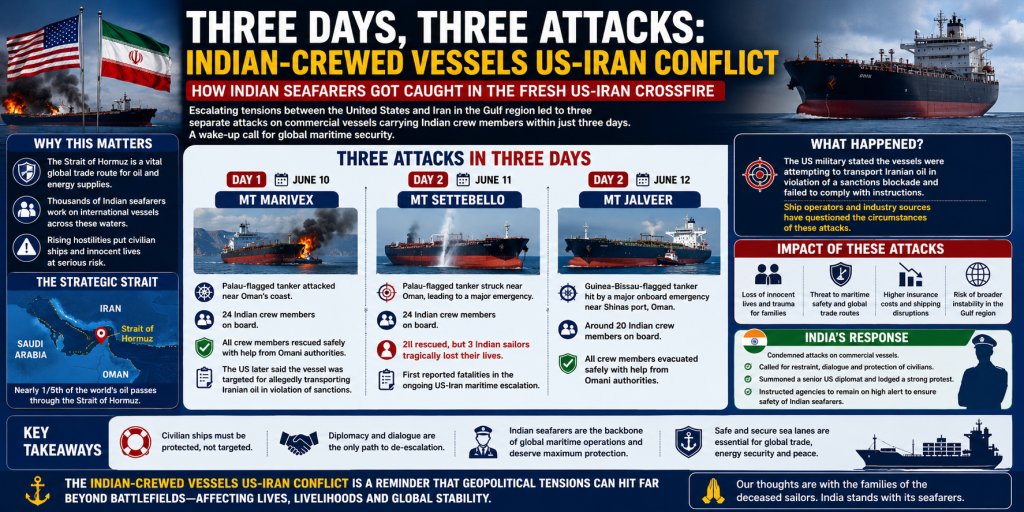
First Incident: MT Marivex
The first major event in the Indian-crewed vessels US-Iran conflict involved MT Marivex, a tanker operating near Oman’s coastline.
Reports indicated that the vessel suffered significant damage after becoming involved in military action linked to the ongoing tensions. The ship carried 24 Indian crew members, all of whom were later rescued safely through coordinated efforts involving local authorities and maritime rescue agencies.
Although there were no fatalities, the incident served as an early warning that commercial shipping was increasingly vulnerable to geopolitical conflicts in the region.
Second Incident: MT Settebello
The most tragic development in the Indian-crewed vessels US-Iran conflict occurred when MT Settebello came under attack near Omani waters.
The tanker carried 24 Indian sailors. Rescue teams managed to evacuate most crew members, but three Indian seafarers lost their lives during the incident. The deaths marked a turning point in the crisis and prompted strong reactions from India.
Families of the victims and maritime organizations called for enhanced protection of civilian vessels operating in conflict-prone regions. The tragedy also intensified diplomatic discussions regarding maritime security and accountability.
Third Incident: MT Jalveer
The third chapter in the Indian-crewed vessels US-Iran conflict involved MT Jalveer, another tanker carrying Indian crew members.
The vessel reportedly encountered a major emergency while operating near Oman’s Shinas port. Fortunately, rescue operations succeeded in evacuating all crew members safely.
While no fatalities occurred in this incident, the event further demonstrated how quickly commercial shipping could become entangled in geopolitical disputes. For many observers, three attacks in three days represented a disturbing pattern that could threaten maritime stability throughout the Gulf region.
Why Are These Waters So Important?
The Indian-crewed vessels US-Iran conflict has focused global attention on the Strait of Hormuz, one of the world’s most critical shipping corridors.
This narrow waterway connects the Persian Gulf with international markets and serves as a major route for oil and gas exports.
Every day, millions of barrels of crude oil pass through the region. Any disruption can have significant consequences for:
- Global energy markets
- Shipping costs
- International trade
- Fuel prices
- Supply chains
Because of its strategic importance, even minor military incidents can quickly generate worldwide economic concerns.
India’s Response
The Indian-crewed vessels US-Iran conflict prompted a strong response from Indian authorities.
India emphasized the importance of protecting commercial shipping and ensuring the safety of Indian seafarers working aboard international vessels. Officials expressed concern over repeated incidents affecting Indian crew members and called for restraint from all parties involved.
The government also intensified monitoring efforts and coordinated with maritime agencies to provide assistance to affected crews and their families.
India remains one of the world’s largest suppliers of maritime manpower, making the protection of its sailors a critical national priority.
Impact on Indian Seafarers
The Indian-crewed vessels US-Iran conflict has highlighted the risks faced by Indian sailors who work on international merchant ships.
Thousands of Indian seafarers serve aboard vessels operating across global trade routes. While their work is essential to international commerce, geopolitical conflicts can place them in dangerous situations beyond their control.
The recent incidents have sparked discussions regarding:
- Crew safety protocols
- Emergency evacuation systems
- Insurance coverage
- Risk assessments
- International maritime protections
Many industry experts believe stronger safeguards may be needed for commercial crews operating in high-risk regions.
Economic and Shipping Concerns
Beyond the human tragedy, the Indian-crewed vessels US-Iran conflict has raised broader concerns about global trade.
Shipping companies may face:
- Higher insurance premiums
- Increased security costs
- Route adjustments
- Operational delays
Energy markets also closely monitor developments in the Gulf because disruptions can influence oil prices worldwide.
Industry analysts warn that prolonged instability could affect international shipping schedules and increase transportation expenses across multiple sectors.
Growing Calls for Diplomacy
The Indian-crewed vessels US-Iran conflict has reinforced calls for diplomatic solutions to regional disputes.
Maritime organizations and international observers argue that commercial vessels should remain protected from military confrontations. Ensuring safe passage through international waterways is considered essential for maintaining global trade and economic stability.
Many experts believe diplomatic engagement remains the most effective path toward reducing tensions and preventing future incidents involving civilian ships.
Conclusion
The Indian-crewed vessels US-Iran conflict serves as a powerful reminder of how geopolitical rivalries can affect ordinary workers and global commerce. Within just three days, three separate vessels carrying Indian sailors became caught in the crossfire of rising tensions between the United States and Iran, resulting in loss of life, emergency rescues, and growing international concern.
As governments, shipping companies, and maritime organizations assess the consequences, the focus remains on protecting civilian crews, ensuring safe navigation, and preventing further escalation. The Indian-crewed vessels US-Iran conflict has not only exposed vulnerabilities in maritime security but also highlighted the urgent need for diplomacy and stability in one of the world’s most important shipping regions.
Add The News Pixel as a preferred source on Google- Click Here