Old Indian Railway Tickets Had Tiny Holes on Both Sides: The Surprising Reason Behind It
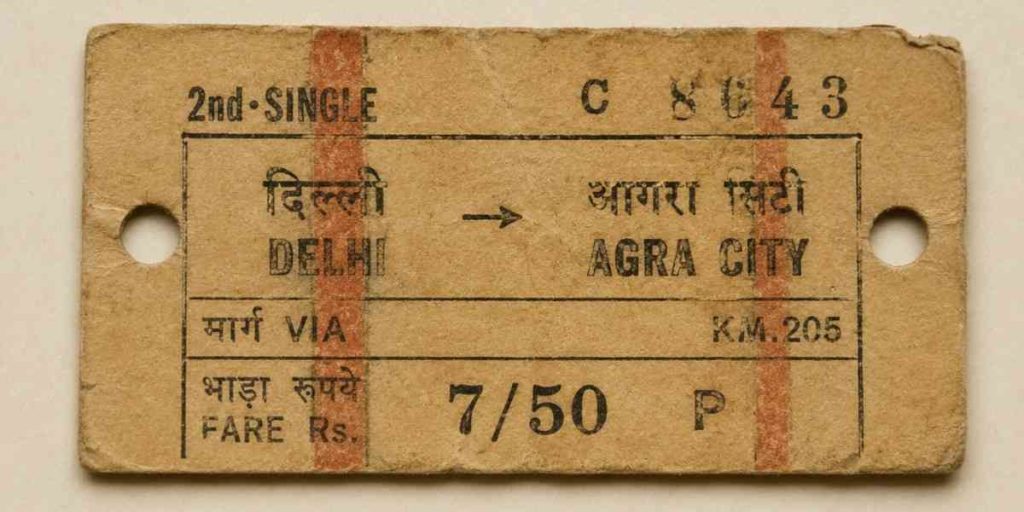
For decades, millions of passengers traveled across India using small cardboard train tickets issued at railway booking counters. These tickets, often printed in different colors and carrying station names, fares, and route details, were a familiar sight for generations of Indian travelers. One curious feature of these tickets often caught people’s attention—the tiny holes punched on both sides.
Many passengers assumed these holes were simply part of the ticket’s design. However, the truth is far more interesting. The holes served a practical purpose in the era before computerized reservations and digital ticketing systems.
The story behind Old Indian railway tickets offers a fascinating glimpse into how Indian Railways managed one of the world’s largest transportation networks using mechanical systems and manual processes.
What Were Old Indian Railway Tickets?
Before the widespread introduction of computerized ticketing, Indian Railways used small cardboard tickets known as Edmondson tickets.
These Old Indian railway tickets were made from thick cardboard and carried essential travel information such as:
- Departure station
- Destination station
- Ticket class
- Fare amount
- Ticket number
The tickets were durable, easy to store, and suitable for handling large passenger volumes across thousands of railway stations.
For many years, these tickets represented the backbone of railway ticketing operations in India.
The Mystery of the Tiny Holes
One distinctive feature of Old Indian railway tickets was the presence of small holes near the edges.
Many travelers wondered:
- Why were the holes there?
- Were they used for validation?
- Did they indicate ticket class?
- Were they part of a security measure?
The answer lies in the mechanical ticketing systems used by railway staff during that era.
The Real Purpose Behind the Holes
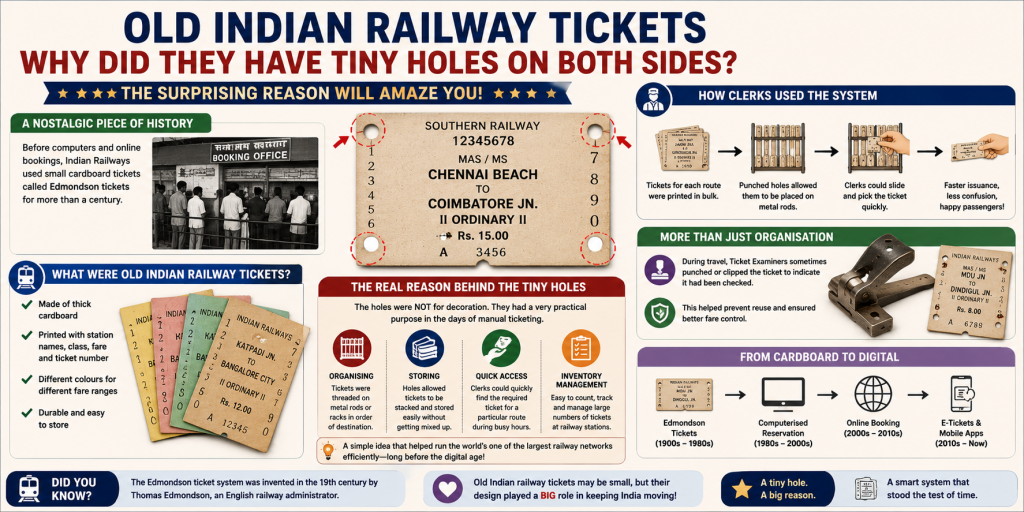
The tiny holes in Old Indian railway tickets were primarily used for organizing, storing, and managing tickets efficiently.
Railway stations maintained large collections of pre-printed cardboard tickets for various routes.
The holes allowed staff to:
- Stack tickets in order
- Secure ticket bundles using metal rods
- Organize tickets by destination
- Retrieve tickets quickly during busy hours
The system helped station employees manage thousands of ticket combinations without modern computers.
How Railway Clerks Used the System
At booking offices, railway clerks often worked under significant pressure, especially during peak travel seasons.
The holes in Old Indian railway tickets enabled tickets to be threaded onto specially designed racks or holders.
This arrangement offered several advantages:
- Easy access to frequently sold tickets
- Faster ticket issuance
- Better inventory management
- Reduced chances of misplacement
The simple design helped improve efficiency at ticket counters where speed and accuracy were essential.
The Edmondson Ticket System
The ticketing method used by Indian Railways was based on the famous Edmondson ticket system, developed in the 19th century by English railway administrator Thomas Edmondson.
This system became popular across many countries because it allowed railway operators to:
- Standardize ticket production
- Improve accounting accuracy
- Manage passenger records efficiently
The holes found in Old Indian railway tickets were part of this broader operational framework that made large-scale railway ticketing possible long before the digital age.
A Solution Before Computers
Today, passengers can book train tickets online within minutes.
However, when Old Indian railway tickets were in use, every aspect of ticketing was handled manually.
Railway staff had to:
- Maintain physical ticket inventories
- Record ticket sales manually
- Reconcile daily transactions
- Track stock levels
The punched-hole system helped streamline these processes and reduced administrative complexity.
What seems like a minor design feature today was actually a practical operational tool.
Ticket Punching and Validation
In some cases, railway staff also used ticket punches to mark or validate Old Indian railway tickets during inspections or at station exits.
Ticket collectors often checked tickets and occasionally punched or clipped them as proof of inspection.
This helped prevent ticket reuse and strengthened fare control measures.
Such manual verification methods were common before electronic databases became available.
Why the System Worked So Well
Despite its simplicity, the design of Old Indian railway tickets proved remarkably effective.
Advantages included:
- Low production costs
- Easy storage
- Durability
- Efficient handling
- Reliable inventory control
Indian Railways managed millions of passengers annually using these straightforward but highly organized systems.
The ticket design reflected an era when practical engineering solutions solved complex operational challenges.
Transition to Computerized Ticketing
As technology advanced, Indian Railways gradually introduced computerized reservation systems and electronic ticketing.
This transformation brought several benefits:
- Faster bookings
- Real-time seat availability
- Digital records
- Online reservations
- Mobile ticketing
As a result, traditional Old Indian railway tickets began disappearing from most stations.
Today, many travelers use e-tickets, mobile apps, and digital payment methods instead of physical cardboard tickets.
A Nostalgic Piece of Railway History
For railway enthusiasts and older passengers, Old Indian railway tickets remain cherished symbols of a bygone era.
Collectors often preserve these tickets as historical memorabilia because they represent:
- India’s railway heritage
- Traditional ticketing practices
- Early transportation management systems
Some railway museums and exhibitions continue to display Edmondson-style tickets to showcase the evolution of railway operations.
Lessons From a Simpler Era
The story of Old Indian railway tickets demonstrates how simple mechanical systems once handled tasks that modern technology now performs digitally.
The tiny holes may seem insignificant today, but they played an important role in organizing one of the world’s largest railway networks.
They remind us that innovation does not always require advanced technology. Sometimes, simple and efficient design can solve complex operational problems remarkably well.
Conclusion
The tiny holes found in Old Indian railway tickets were far more than decorative features. They were practical tools that helped railway staff organize, store, and manage vast numbers of tickets in the era before computerized systems. By enabling efficient inventory control and faster ticket issuance, these small holes contributed to the smooth functioning of Indian Railways for decades.
Although digital ticketing has largely replaced cardboard tickets, the legacy of Old Indian railway tickets remains an important chapter in India’s transportation history. Their simple yet effective design continues to fascinate railway enthusiasts and serves as a reminder of the ingenuity that powered railway operations long before the digital revolution.
Add The News Pixel as a preferred source on Google- Click Here