Great Nicobar Project Explained: Why It Matters and How the Centre Responded to Rahul Gandhi’s Allegations

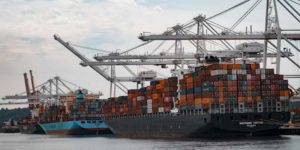
The Great Nicobar Project has emerged as one of India’s most ambitious infrastructure and strategic development initiatives. Located in the southernmost part of the Andaman and Nicobar Islands, the project aims to transform Great Nicobar Island into a major economic, maritime, and logistics hub.
Recently, the Great Nicobar Project became the center of political debate after criticism from opposition leaders, including Rahul Gandhi. In response, the Central Government defended the project, emphasizing its strategic, economic, and national security significance while arguing that critics were overlooking its long-term benefits.
As discussions continue, many people are asking an important question: What exactly is the Great Nicobar Project, and why is it considered so important for India’s future?
What Is the Great Nicobar Project?
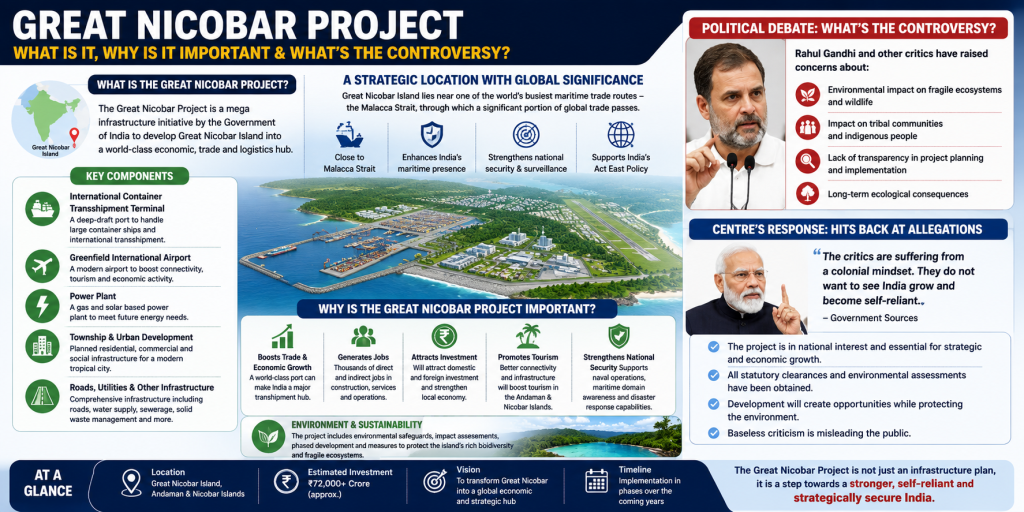
The Great Nicobar Project is a large-scale infrastructure development plan proposed for Great Nicobar Island, located near one of the world’s busiest maritime trade routes.
The project includes several major components:
- An international container transshipment terminal
- A greenfield international airport
- A power generation facility
- Urban development infrastructure
- Residential and commercial zones
The objective is to transform the island into a strategic economic center capable of supporting trade, tourism, logistics, and national security interests.
Strategic Importance of Great Nicobar
One of the biggest reasons the Great Nicobar Project is considered important is its strategic location.
Great Nicobar Island lies close to the Malacca Strait, one of the world’s busiest shipping corridors through which a significant portion of global trade passes every year.
Its location provides India with opportunities to:
- Strengthen maritime presence
- Improve trade connectivity
- Enhance naval capabilities
- Monitor critical sea routes
- Expand regional influence
Security experts often describe the island as a strategically valuable asset due to its proximity to major international shipping lanes.
Economic Benefits of the Project
The Great Nicobar Project is expected to generate substantial economic opportunities.
Potential benefits include:
Increased Trade Activity
The proposed transshipment port could help India capture a larger share of international maritime cargo traffic.
Employment Generation
Construction and operational phases may create thousands of jobs directly and indirectly.
Tourism Growth
The planned airport and supporting infrastructure could boost tourism in the region.
Regional Development
Improved infrastructure may contribute to broader economic development across the Andaman and Nicobar Islands.
Government officials believe the project could serve as a major catalyst for long-term economic growth.
Why a Transshipment Port Matters
A key feature of the Great Nicobar Project is the planned international transshipment terminal.
Currently, a significant amount of Indian cargo is routed through foreign ports for transshipment before reaching final destinations.
A domestic transshipment hub could:
- Reduce logistics costs
- Improve shipping efficiency
- Strengthen trade competitiveness
- Enhance India’s maritime capabilities
Many policymakers view the port as an important step toward reducing dependence on foreign maritime infrastructure.
National Security Considerations
The Great Nicobar Project also has significant national security implications.
Given the island’s strategic location, enhanced infrastructure could support:
- Maritime surveillance
- Naval operations
- Disaster response capabilities
- Regional security cooperation
The Indian Ocean region has become increasingly important in global geopolitics, making strategic infrastructure investments a priority for policymakers.
Supporters argue that the project strengthens India’s ability to protect its maritime interests.
Environmental Concerns Surrounding the Project
While supporters emphasize the benefits of the Great Nicobar Project, environmental groups have raised concerns regarding its ecological impact.
The island is known for:
- Rich biodiversity
- Unique ecosystems
- Protected wildlife habitats
- Sensitive coastal environments
Critics worry that large-scale construction could affect local ecosystems and wildlife populations.
Environmental conservation remains a central topic in discussions surrounding the project.
Political Debate Intensifies
The Great Nicobar Project recently became the subject of political controversy after opposition leaders questioned aspects of the development plan.
Critics have expressed concerns regarding:
- Environmental sustainability
- Ecological impacts
- Tribal communities
- Long-term consequences
These concerns have generated widespread public discussion and media attention.
The debate highlights the challenge of balancing economic development with environmental protection.
Government’s Response to Criticism
In response to recent allegations, the government strongly defended the Great Nicobar Project.
Officials argued that:
- Necessary environmental assessments were conducted
- Strategic benefits are substantial
- Economic gains will support national development
- Infrastructure investments are essential for future growth
Government representatives emphasized that the project aligns with India’s broader development and security objectives.
They also stated that critics were failing to acknowledge the long-term national benefits associated with the initiative.
Impact on India’s Maritime Vision
The Great Nicobar Project fits within India’s broader efforts to strengthen its maritime economy.
The government has increasingly focused on:
- Port modernization
- Logistics infrastructure
- Coastal development
- Blue economy initiatives
Developing Great Nicobar could enhance India’s position as a major maritime power in the Indo-Pacific region.
Industry experts believe improved maritime infrastructure will become increasingly important as global trade volumes continue to grow.
Future Outlook
The future success of the Great Nicobar Project will depend on balancing multiple priorities.
These include:
- Economic development
- Environmental sustainability
- Strategic security
- Community interests
As implementation progresses, stakeholders will continue monitoring how these objectives are addressed.
The project is likely to remain a key topic in discussions about India’s infrastructure and development strategy for years to come.
Conclusion
The Great Nicobar Project represents one of India’s most ambitious infrastructure and strategic initiatives. With plans for a major transshipment port, international airport, power infrastructure, and urban development, the project aims to strengthen India’s economic, maritime, and security capabilities.
While environmental concerns and political debates continue, supporters argue that the project offers substantial long-term benefits for national growth and regional influence. As India seeks to enhance its role in global trade and the Indo-Pacific region, the Great Nicobar Project is expected to play an increasingly important role in shaping the country’s future development trajectory.
Also read: Coffee Anxiety Explained: Doctor Reveals Why Coffee Can Make You Feel Anxious and How to Prevent It
Add The News Pixel as a preferred source on Google- Click Here