
Coffee Anxiety Explained: Doctor Reveals Why Coffee Can Make You Feel Anxious and How to Prevent It
For millions of people around the world, coffee is an essential part of the daily routine. Whether it’s a morning cup to boost energy or an afternoon pick-me-up, coffee remains one of the most widely consumed beverages globally. However, some individuals experience nervousness, restlessness, racing thoughts, or even panic-like symptoms after drinking coffee. This phenomenon is commonly referred to as coffee anxiety.
Health experts say that while coffee offers several benefits, its caffeine content can affect people differently. Understanding why coffee anxiety occurs and learning how to manage it can help individuals enjoy coffee without unpleasant side effects.
What Is Coffee Anxiety?
Coffee anxiety refers to feelings of nervousness, uneasiness, jitteriness, or increased stress that occur after consuming caffeine-containing beverages such as coffee.
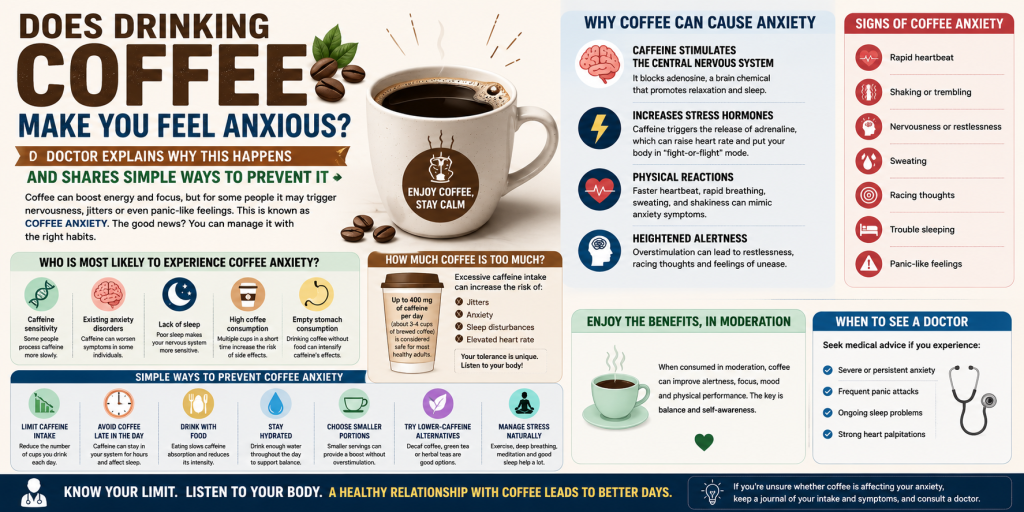
Common symptoms include:
- Rapid heartbeat
- Restlessness
- Shaking or trembling
- Sweating
- Difficulty concentrating
- Increased nervousness
- Trouble sleeping
- Feelings of panic
While not everyone experiences these symptoms, some individuals are more sensitive to caffeine than others.
Why Does Coffee Cause Anxiety?
Doctors explain that coffee anxiety is primarily linked to caffeine, a natural stimulant found in coffee.
Caffeine works by stimulating the central nervous system. It blocks the effects of adenosine, a chemical in the brain that promotes relaxation and sleepiness.
As a result, caffeine can:
- Increase alertness
- Raise heart rate
- Stimulate adrenaline production
- Improve focus temporarily
However, excessive stimulation can sometimes trigger anxiety-like symptoms, especially in sensitive individuals.
The Role of Adrenaline
One major reason behind coffee anxiety is the release of adrenaline, often called the “fight-or-flight” hormone.
When caffeine enters the bloodstream, the body may respond by releasing more adrenaline.
This can lead to:
- Faster breathing
- Increased heart rate
- Heightened alertness
- Feelings of tension
Although these responses can improve short-term performance, they may also mimic symptoms associated with anxiety disorders.
Who Is Most Likely to Experience Coffee Anxiety?
Not everyone reacts to caffeine in the same way.
Several factors may increase the likelihood of experiencing coffee anxiety, including:
Caffeine Sensitivity
Some individuals naturally process caffeine more slowly, making them more vulnerable to its stimulating effects.
Existing Anxiety Disorders
People who already experience anxiety may notice that caffeine worsens their symptoms.
Lack of Sleep
Poor sleep can make the nervous system more sensitive to caffeine stimulation.
High Coffee Consumption
Consuming multiple cups of coffee in a short period may increase the risk of anxiety-related symptoms.
Empty Stomach Consumption
Drinking coffee without eating may intensify caffeine’s effects.
How Much Coffee Is Too Much?
The amount of caffeine that triggers coffee anxiety varies from person to person.
Many health experts suggest that moderate caffeine consumption is generally safe for most healthy adults.
However, consuming large quantities of coffee can increase the likelihood of experiencing:
- Jitters
- Anxiety
- Sleep disturbances
- Elevated heart rate
Monitoring personal tolerance levels is important when determining safe consumption habits.
Signs That Coffee May Be Affecting You
Some people may not immediately recognize the connection between caffeine and anxiety symptoms.
Potential signs of coffee anxiety include:
- Feeling unusually nervous after coffee
- Racing thoughts shortly after consumption
- Increased irritability
- Difficulty relaxing
- Sleep problems later in the day
Keeping track of caffeine intake and symptoms can help identify whether coffee is contributing to anxiety.
Simple Ways to Prevent Coffee Anxiety
Fortunately, there are several practical strategies for reducing the risk of coffee anxiety.
Limit Daily Caffeine Intake
Reducing the number of cups consumed each day may significantly decrease anxiety symptoms.
Avoid Coffee Late in the Day
Consuming caffeine in the evening can interfere with sleep, which may worsen anxiety.
Drink Coffee With Food
Eating before or while drinking coffee can help slow caffeine absorption.
Stay Hydrated
Proper hydration supports overall health and may help reduce some caffeine-related side effects.
Choose Smaller Portions
Smaller servings often provide the desired energy boost without excessive stimulation.
Consider Lower-Caffeine Alternatives
Some individuals benefit from switching to:
- Decaffeinated coffee
- Tea
- Lower-caffeine beverages
The Connection Between Coffee and Sleep
Sleep plays an important role in managing coffee anxiety.
Caffeine can remain in the body for several hours after consumption.
When sleep quality declines, individuals may become more sensitive to caffeine’s effects, creating a cycle where:
- Poor sleep increases fatigue.
- More coffee is consumed to stay alert.
- Increased caffeine worsens sleep quality.
- Anxiety symptoms become more noticeable.
Breaking this cycle can significantly improve overall well-being.
Health Benefits of Coffee Still Exist
Despite concerns about coffee anxiety, coffee remains associated with several potential health benefits when consumed in moderation.
Research has linked moderate coffee consumption to:
- Improved alertness
- Enhanced concentration
- Better physical performance
- Antioxidant intake
- Potential long-term health benefits
The key is finding the right balance between enjoying coffee and avoiding excessive caffeine intake.
When to Seek Medical Advice
While occasional coffee anxiety is usually manageable, persistent symptoms should not be ignored.
Individuals should consider consulting a healthcare professional if they experience:
- Severe anxiety symptoms
- Frequent panic attacks
- Ongoing sleep problems
- Significant heart palpitations
A doctor can help determine whether caffeine is the primary cause or if other factors may be contributing to symptoms.
Conclusion
Coffee anxiety is a common experience that occurs when caffeine overstimulates the nervous system, leading to symptoms such as nervousness, jitteriness, and increased heart rate. While coffee can provide valuable energy and focus benefits, some individuals are more sensitive to its effects than others.
By understanding personal caffeine tolerance, avoiding excessive consumption, drinking coffee with food, and maintaining healthy sleep habits, most people can reduce the risk of coffee anxiety while still enjoying their favorite beverage. As with many aspects of health, moderation and self-awareness remain the keys to a balanced relationship with coffee.
Add The News Pixel as a preferred source on Google- Click Here